
Powder coating is one of the most environmentally friendly industrial finishes. It contains no solvents, so it releases little or no volatile organic compounds, and unused overspray can often be reclaimed and reused. Once fully cured, the coating is a stable, inert film. During application, dust control, ventilation and protective equipment keep workers safe.
 By Jarod Hammar, Owner of H-Town Coaters · Published · Updated
- Powder contains no solvents, so VOC emissions are near zero.
- Overspray can often be collected and reused, reducing waste.
- Longer-lasting finishes mean fewer recoats over a product’s life.
- Cured powder is a stable, inert film; the main hazards are dust and heat during application.
- Modern pretreatments and heavy-metal-free powders reduce environmental impact further.
Powder coating is widely considered one of the cleanest ways to finish metal. It was adopted by many manufacturers precisely because it avoids the solvents, emissions and waste of traditional liquid paint. This guide explains where those environmental benefits come from, how powder compares with other finishes, and what safety facts still matter in the shop and after installation. It is part of our powder coating basics series.
Why powder coating is cleaner than solvent paint
Liquid paint is pigment and resin suspended in a carrier. In solvent-based paints, that carrier evaporates into the air as the paint dries, releasing volatile organic compounds (VOCs) that contribute to smog and require ventilation and emissions controls. Powder coating skips the carrier entirely. It is applied as a dry powder, held in place by static charge, and then melted and cured in an oven. Because there is no solvent to evaporate, VOC emissions are near zero.
The main environmental benefits
- Little or no VOCs. No solvents means far less air pollution and fewer emissions permits and controls.
- Reclaimable overspray. Powder that misses the part can be collected by booth recovery systems, sieved and reused, so a large share of material ends up on parts instead of in the waste stream.
- Less hazardous waste. No solvent-soaked rags, thinners or paint sludge to dispose of.
- Longer service life. Thick, tough films last longer than many paints, so products are refinished and replaced less often.
- One-coat coverage. A single powder coat often achieves the film build that would take several liquid coats.
- Heavy-metal-free formulations. Modern powders are generally made without lead and hexavalent chromium pigments.
Powder coating vs other finishes: environmental comparison
| Finish | VOCs | Waste | Typical service life |
|---|---|---|---|
| Powder coating | Near zero | Low; overspray often reclaimed | Long |
| Solvent-based liquid paint | High | Solvent waste, rags, sludge | Moderate |
| Water-based liquid paint | Low to moderate | Wastewater, overspray | Moderate |
| Chrome plating | Not VOC-driven | Plating baths and hazardous rinse water | Long |
| Hot-dip galvanizing | Low | Zinc dross and fluxes | Long, appearance limited |
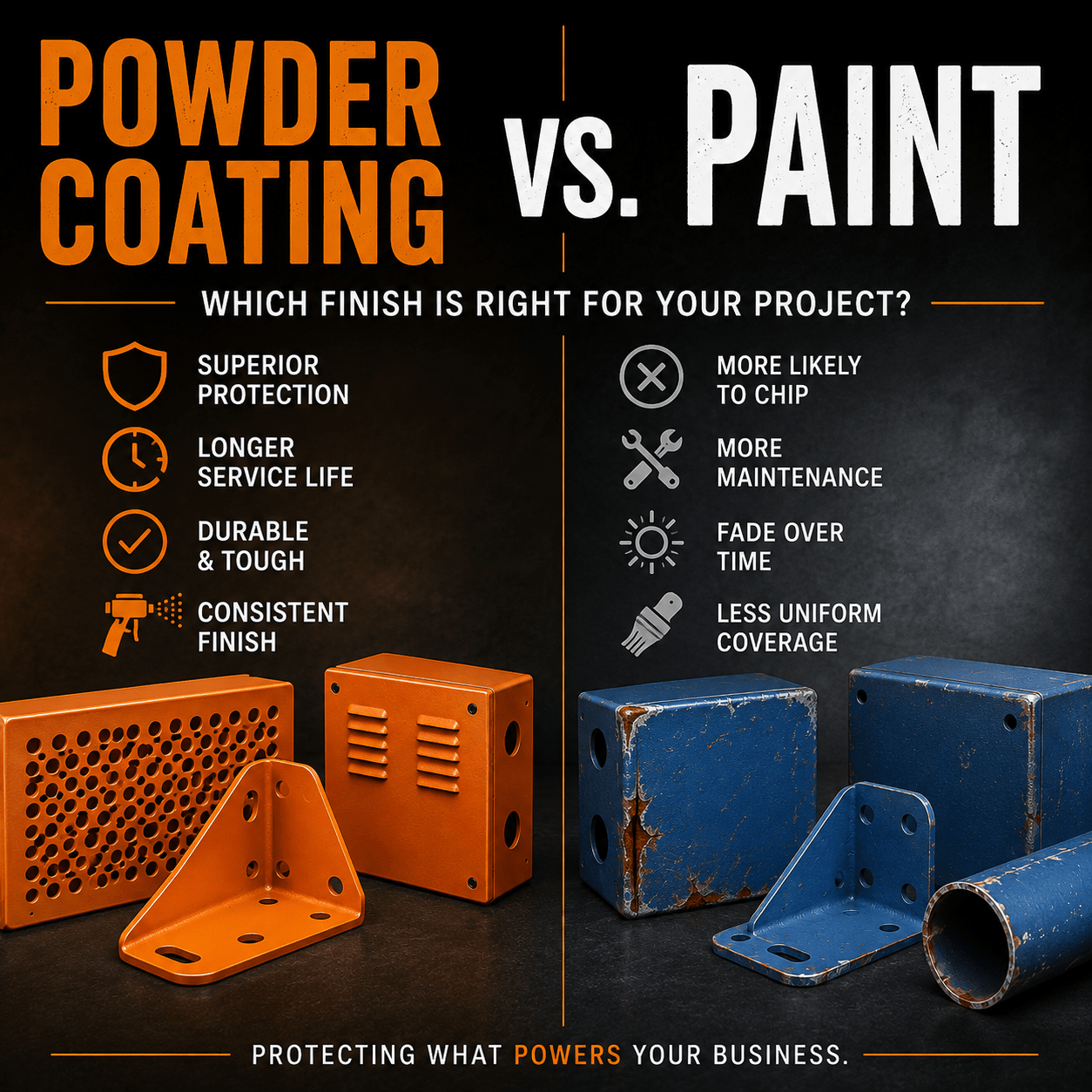
For a full performance comparison, read powder coating vs paint.
Is powder coating toxic?
Once fully cured, powder coating is a stable, crosslinked plastic film. It does not off-gas solvents and is not considered hazardous in normal use on furniture, railings, equipment or buildings. The safety considerations are mostly in the shop:
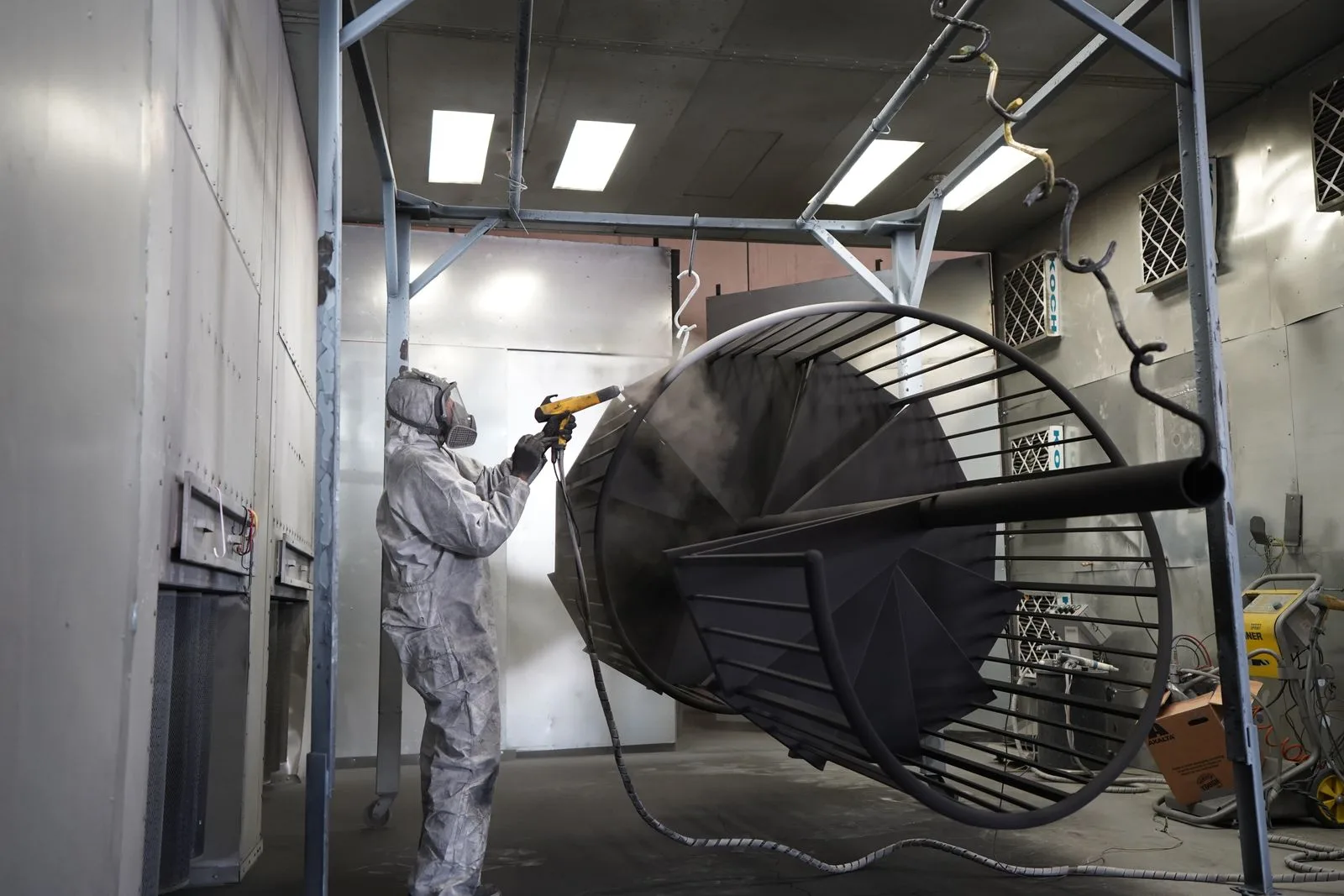
- Dust. Uncured powder is a fine particulate. Booths with exhaust and recovery systems, along with respirators, protect workers from breathing it.
- Combustible dust. Like flour or sawdust, fine powder in the air can be combustible, so booths are designed and maintained to control concentrations and ignition sources.
- Curing fumes. Powders release small amounts of volatile material as they cure, which oven exhaust systems remove.
- Heat. Cure ovens and freshly cured parts are hot.
Every powder comes with a safety data sheet that lists its ingredients and handling requirements. If you need to know whether a specific product contains a particular substance, the safety data sheet is the place to check.
Energy use: the trade-off
Powder coating needs an oven, and ovens use energy, usually natural gas or electricity. That is the main environmental cost of the process. Several factors offset it: one coat often replaces several, no energy is spent capturing or incinerating solvent emissions, and longer service life means fewer recoats over a product’s life. Low-temperature cure powders and efficient ovens are reducing this energy use further, and heavy parts can be scheduled to make the most of oven time.
Pretreatment chemistry has improved too
Preparation is part of the environmental picture. Older pretreatment lines relied on heavy-metal chemistries and generated more sludge. Many shops now use phosphate-free or thin-film zirconium-based pretreatments, chrome-free conversion coatings for aluminum and closed-loop rinsing that reduces water use and wastewater. Abrasive blasting with recyclable media such as steel grit also reduces waste compared with single-use abrasives.
Longer life is the biggest sustainability benefit
The most sustainable coating is the one that does not have to be redone. A finish that resists chipping, fading and corrosion for many years avoids the materials, labor, transportation and disposal of repeated refinishing or early replacement. Choosing the right powder for the environment, and preparing the metal properly, does more for sustainability than almost any other decision. See how long powder coating lasts.
Powder coating and green building projects
Architects and building owners pursuing sustainability goals often look at coating emissions, durability and recyclability. Powder-coated aluminum and steel are recyclable at end of life, the finish adds little or no VOC burden, and long-life AAMA-rated powders reduce maintenance over a building’s life. Powder manufacturers publish product data, and some offer environmental product declarations, that design teams can use when documenting materials. Learn about architectural powder coating.
Food contact and sensitive environments
Some powders are formulated and certified for food-contact surfaces, food-processing equipment or medical settings, and antimicrobial powders are available for high-touch surfaces. These are specialty products; a standard powder should not be assumed safe for food contact. When it matters, specify the certification and confirm it with the powder manufacturer’s documentation. See medical powder coating.
Recycling powder-coated metal
Powder-coated steel and aluminum can be recycled like other scrap metal. In the melting process the thin organic coating burns off, and the metal is reused. Unused powder can often be reclaimed during application, and some suppliers offer programs for unused or off-spec powder.
Common myths about powder coating and the environment
- “Powder coating is plastic, so it is bad for the environment.” It is a thin, durable polymer film that extends the life of recyclable metal and avoids solvent emissions.
- “No VOCs means no safety precautions.” Dust, combustibility and heat still require proper equipment and training.
- “All powders are the same.” Products differ in chemistry, certifications and outdoor durability; choose for the application.
How to make your project greener
- Choose a powder rated for the real environment so the finish lasts.
- Use stock colors where possible to reduce custom powder waste.
- Group parts of the same color to reduce color changes and cleaning.
- Refinish sound metal instead of replacing it.
- Ask about low-cure powders for heat-sensitive or energy-conscious projects.
How powder overspray is reclaimed
In a powder booth, air is drawn through the spray area into a recovery system. Cyclones or cartridge filters separate powder from the air. In many systems the recovered powder is sieved to remove debris and blended back with fresh powder, so it can be sprayed again. How much can be reused depends on the system, the number of color changes and the powder type; shops that run long batches in one color reclaim the most. Some finishes, such as certain metallics, are usually sprayed without reclaim to keep their appearance consistent. Even then, captured powder is contained in filters rather than released to the air.
Regulations that favor powder coating
Air quality rules in the United States regulate VOC emissions from surface coating operations, and many manufacturers switched to powder partly to reduce permitting, emissions monitoring and solvent handling requirements. Because powder releases little or no VOCs, coating lines can often operate with simpler air controls than solvent paint lines. Waste rules also apply to spent solvents and paint sludge, which powder largely avoids. Exact requirements vary by location and facility size, but the overall effect is that powder coating carries a lighter regulatory burden than solvent-based painting.
Questions to ask about a coater’s environmental practices
- How is overspray collected, and is any of it reused?
- What pretreatment chemistry is used, and how is rinse water handled?
- How are spent blast media and removed coatings disposed of?
- Can you provide safety data sheets for the powders on my job?
- Do you offer certified powders when food contact, medical or green-building documentation is required?
Powder coating chemistries and their environmental profile
Polyester, epoxy, hybrid, polyurethane and fluoropolymer powders all share the solvent-free advantage. Where they differ is service life in a given environment. An exterior polyester lasts far longer outdoors than an epoxy, and a super-durable or fluoropolymer powder keeps architectural color longer still. Picking the chemistry that matches the exposure is what turns powder’s clean process into a genuinely lower lifetime impact. Some polyester powders use curing agents, such as TGIC or TGIC-free alternatives, that have their own handling guidelines; shops follow the safety data sheet for each product. Low-temperature cure powders also make it possible to coat heat-sensitive substrates and cut oven energy.
The bottom line on powder coating and the environment
Powder coating is not impact-free, since it uses energy to cure and must be handled safely in the shop. Compared with solvent paint, though, it removes most emissions and waste, and its durability means fewer refinishing cycles. For most metal products, that makes it the more responsible finish.
Our approach
H-Town Coaters follows the safety and environmental practices described on our safety and environmental compliance page. Our proprietary Polychrotina finish brings the same clean process to decorative aged-metal looks; read sustainable metal finishes. To discuss your project, use the free quote form.
Frequently asked questions
Fully cured powder coating is a stable, inert plastic film and is not considered hazardous in normal use. During application, uncured powder is a fine dust that requires ventilation and respiratory protection.
Powder contains no solvents, so it releases little or no volatile organic compounds compared with solvent-based liquid paint.
In most applications, yes: no solvents, less hazardous waste, reclaimable overspray and longer service life mean fewer recoats.
Some powders are formulated and certified for food contact or food-processing environments. Standard powders are not automatically food safe, so specify a certified product when needed.
Unused overspray can often be reclaimed and reused. Coated metal can be recycled as scrap; the coating burns off in the melting process.
Modern architectural and industrial powders are generally formulated without lead and hexavalent chromium; check the product safety data sheet if it matters for your project.
Jarod grew H-Town Coaters from Cutting Edge Powder Coating into a process-driven coating partner for manufacturers, fabricators, contractors and businesses across the Houston area. More about H-Town · LinkedIn